If you're upgrading your home's cooling and heating system, you'll inevitably face the central air vs. mini split debate. Both systems can effectively control your home's climate, but they work very differently and have distinct advantages depending on your situation. Here's an honest, comprehensive comparison.
How Each System Works
Central air conditioning uses a network of ducts running through your walls, attic, and floors to distribute conditioned air from a single large unit throughout your home. One thermostat controls the temperature for the entire system.
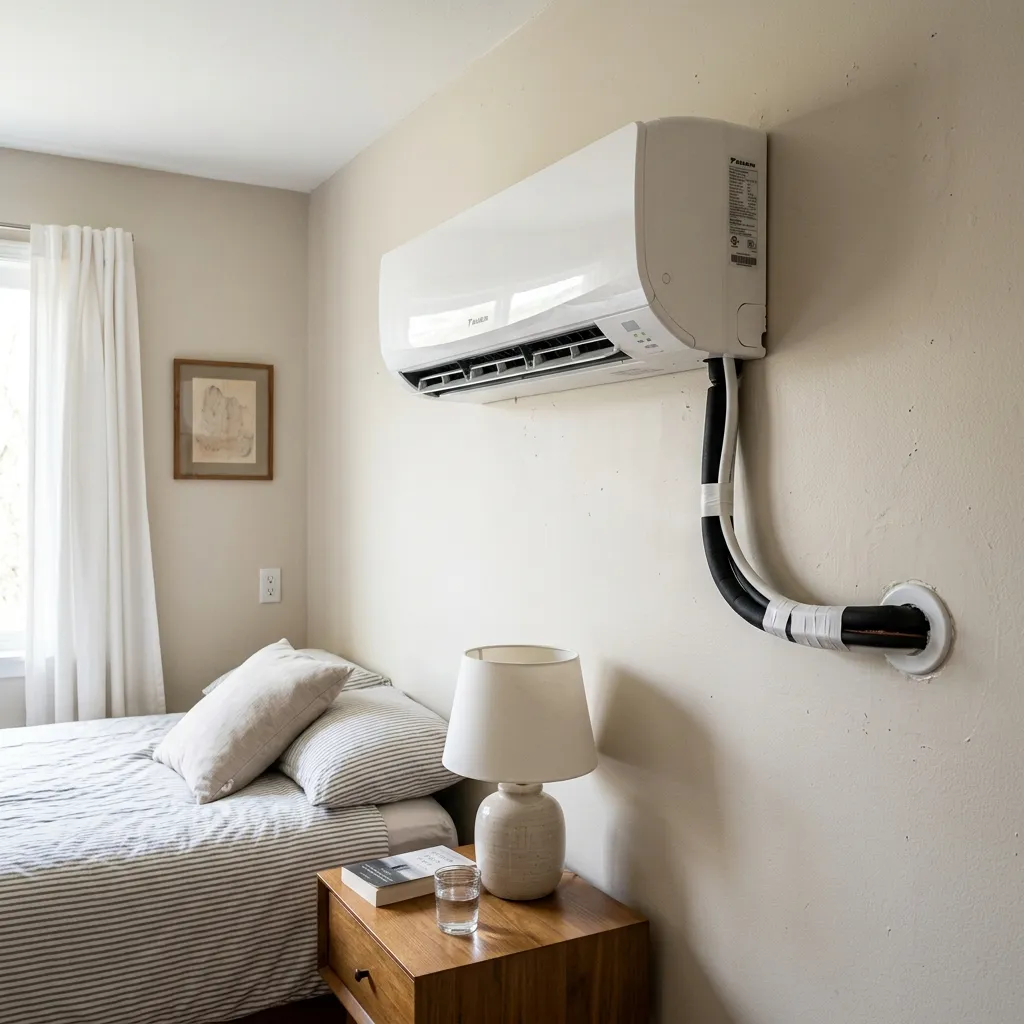
Ductless mini splits connect an outdoor compressor to one or more indoor air handlers via small refrigerant lines (no ducts required). Each indoor unit has its own thermostat and can be independently controlled.
Energy Efficiency
Winner: Mini Split
Mini splits are significantly more energy-efficient. Modern inverter mini splits achieve SEER ratings of 18–33, compared to central AC systems which typically rate 14–21 SEER. More importantly, ductwork in central systems loses 25–30% of conditioned air through leaks and heat transfer before it reaches the living space. Mini splits deliver conditioned air directly no duct losses.
Installation Cost
Winner: Depends on your home
For homes that already have ductwork, central AC installation costs less upfront: $3,000–$7,000 for a new system installation. For homes without existing ducts, installing ductwork adds $5,000–$15,000+, making mini splits ($1,500–$10,000 depending on zones) the dramatically more affordable choice.
Zoning and Control
Winner: Mini Split (by a wide margin)
This is where mini splits truly excel. Each indoor unit has its own independent thermostat, allowing different rooms to be set to different temperatures simultaneously. No more fighting over the thermostat, no cooling empty rooms, no uncomfortable temperature differences between floors. Central AC systems require expensive add-on damper systems to achieve even basic zoning.
Installation Disruption
Winner: Mini Split
Installing central AC in a home without existing ductwork is a major construction project walls opened, ceilings accessed, and weeks of work. Mini split installation requires only a 3-inch hole through the wall for the refrigerant lines. Most single-zone installations are complete in one day.
Aesthetics
Winner: Central Air (for some homeowners)
Central AC's vents are small and blend into ceilings. Mini split indoor units are visible on the wall or ceiling. Modern mini split air handlers are sleek and low-profile, but they are visible. For some homeowners in historic or design-focused homes, this matters.
Maintenance
Winner: Mini Split
Central AC ducts accumulate dust, mold, and debris and require periodic professional duct cleaning ($300–$700). Mini split filters are easily removed and rinsed by the homeowner every 2–4 weeks. Annual professional mini split cleanings ($150–$250) are simpler and less invasive than duct cleaning.
Which Is Right for You?
Choose a mini split if: your home lacks existing ductwork, you want room-by-room temperature control, you prioritize energy efficiency, or you're cooling a specific addition, sunroom, garage, or new construction.
Choose central AC if: your home already has quality ductwork in good condition and you prefer whole-home temperature control from a single thermostat.
Get a Free Mini Split Consultation
Not sure which system is right for your specific home? Mini Split Repair Master provides free consultations and quotes. Our experts will assess your home, explain the options, and give you an honest recommendation. Call (877) 359-0825 today.